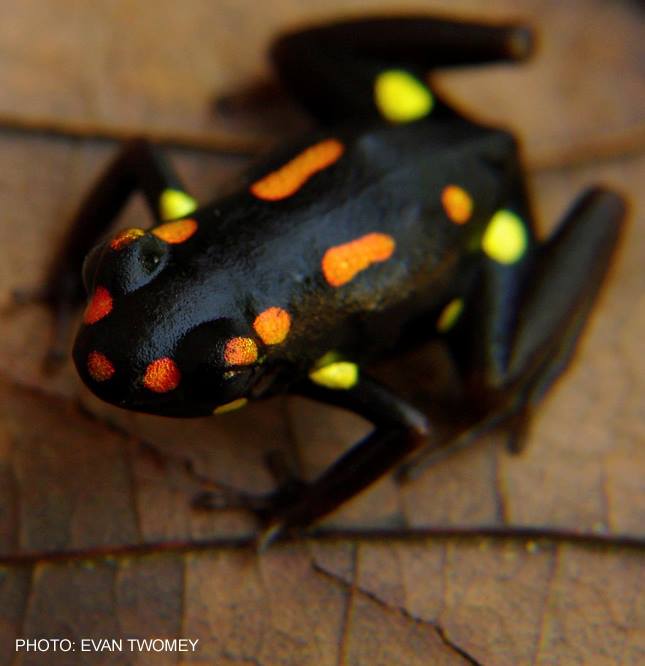
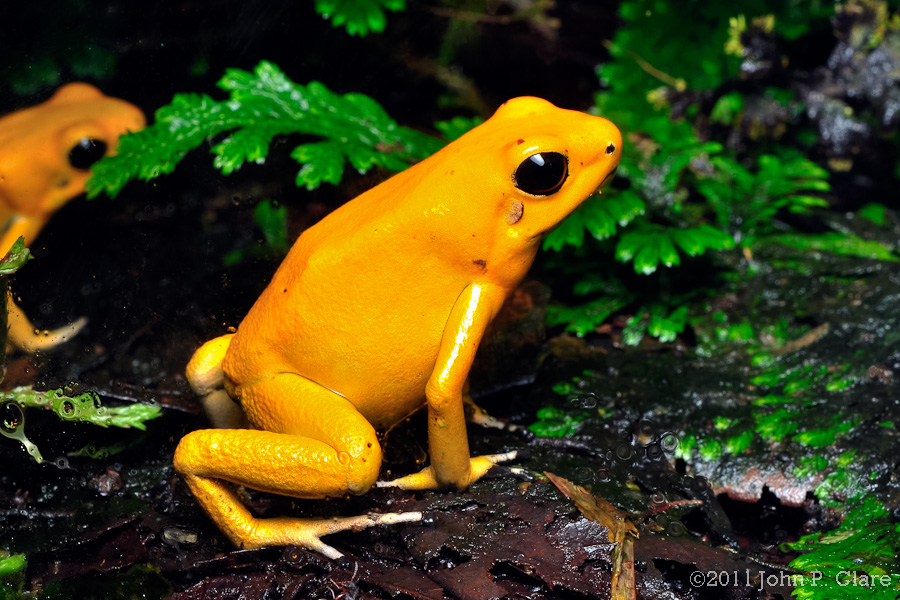
Até quem não gosta de sapos tem que admitir que essa família de anfíbios é fantástica! Parecendo um verdadeiro arco-íris, os animais da família Dendrobatidae possuem exuberantes cores fortes que deixam um recado claro: não me comam, sou tóxico; essa característica é chamada de aposematismo e é presente em diversos animais, inclusive algumas espécies de joaninha. E o aviso não é para menos: essas espécies são altamente venenosas, inclusive um dos animais mais tóxico do mundo pertence à essa família, o sapo dourado da espécie Phyllobates terribilis, cuja pele possui uma glândula que libera alcalóidelipofílico, um veneno forte o suficiente para matar cerca de 10 seres humanos por falência multipla dos órgãos. Os alcalóides são obtidos através da alimentação de alguns artrópodos (ácaros e formigas) que alimentam-se de plantas que contém alcalóides.
Esses animais são encontrados somente na parte tropical e úmida da América, entre a América Central até a região Sudeste no Brasil, e algumas tribos indígenas da região utilizam esses sapos como arma, esfregando sua pele nas pontas de seus dardos e deixando-as cheias de veneno para poder caçar, o que fez com que algumas espécies ficassem conhecidas como sapos-ponta-de-flecha. Depois que eles conseguem a presa, eles cozinham a carne, para neutralizar o veneno do sapo da carne antes de comer. Apesar de ser necessário ingerir o animal para que o ser humano acabe envenenado, manuseia-se eles com cuidado e luvas, pois se houver algum ferimento pode ocorrer acidentes. Os índios manipulam esse animal cuidadosamente com folhas.
São animais diurnos, com poucos predadores naturais já que apenas indivíduos com adaptações para sobreviver ao veneno conseguem se alimentar deles, como é o caso da serpente Leimadophis epinephelus. Os ovos são terrestres e quando eclodem os pais transportam os girinos nas costas até a agua, onde eles possam terminar o desenvolvimento.
Even those who do not like frogs have to admit that this family of amphibians is fantastic! Looking
like a real rainbow, the animals in Dendrobatidae family have exuberant bright
colors that give a clear message: do not eat me, I'm toxic; this feature is called aposematism and is present in many animals, including some species of ladybirds. And
the warning is for real: these species are highly poisonous, actually one of the world's most toxic animals belong to this family,
the golden-dart-frog species Phyllobates terribilis, whose skin has a gland
that releases ipophilic alkaloid, a poison strong enough to kill around 10 people for multiple organ failure. They get the alkaloids from eating some arthropods (mites and ants) that feed on plants containing alkaloids.
These
animals are found only in tropical and humid part of America, from
Central America to the Southeast region of Brazil, and some Indian tribes of the region use these frogs as a weapon, rubbing their skin on
the tips of their darts and making them full of poison to be able to hunt, which has made some species to be known as Dart-Poison Frogs. Once they get the prey, they cook the meat to neutralize the poison before eating.
Although
it is necessary to swallow the animal for humans to be poisoned, peoples handle them carefully with gloves since any injury can result
in an accident. The Indians manipulate the animal thoroughly using leavessince only individuals
with adaptations to survive the poison can feed on them, such as the snake Leimadophis epinephelus. They have their eggs on land and when they hatch the parents carry the tadpoles back to the water, where they can finish the development.
Photo: Unknown photographer, if you know, please tell us
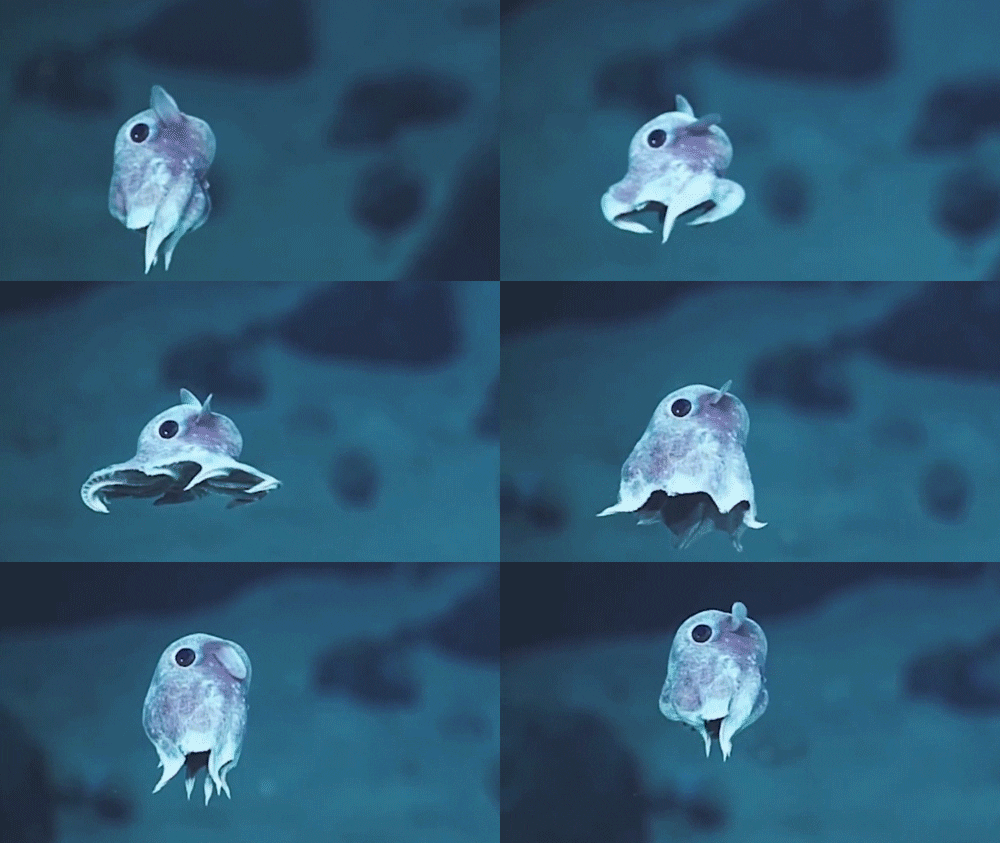
Parece um bichinho criado pela mente criativa de uma criança, mas não é. Os polvos conhecidos como Dumbo pertencem ao gênero Grimpoteuthis e são encontrados em pelo mundo todo em grandes profundidades de 3000 a 4000 metros, embora alguns tenham sido registrados a incríveis 7000 metros, o que faz dos polvos desse gênero os que são encontrados mais profundamente entre todas as espécies do mundo. O nome deriva dessas nadadeiras projetadas no topo de seu manto próximo aos olhos (usadas para impulsionar o animal enquanto nada) que lembram as orelhas do famoso elefante dos filmes da Disney. Embora sejam extremamente interessantes, não há muitas informações sobre eles ainda.
Eles pertencem à ordem Cirrina, que difere da maioria dos outros polvos por não usarem a propulsão da água para se locomover confiando apenas nas nadadeiras e braços como forma principal de locomoção, e também pelo fato de possuírem uma concha interna. Além disso, eles diferem de todos os outros polvos por engolirem as presas (pequenos crustáceos, bivalves, copépodes) completamente inteiras, já que suas rádulas são reduzidas ou ausentes, impossibilitando o corte de pedaços menores.
Adaptados ao ambiente frio e alta pressão das profundidades abissais, entre os braços eles possuem o manto como se fosse uma rede e é utilizado para derivar pela água, chamado de estilo-guarda-chuva, pois lembra um guarda-chuva aberto boiando na água (ver vídeo abaixo "balé do polvo").
Fêmeas dissecadas foram encontradas com ovos em diferentes estágios de desenvolvimento, o que indica que não há uma época específica para reprodução e elas podem por ovos sob rochas durante o ano todo. Os machos possuem um saco de esperma modificado em um dos braços, que ele usa para introduzir os espermatozoides dentro do manto da fêmea.
O tamanho da maioria das espécies varia entre 20 e 30cm, embora tenha sido encontrado um espécime de tamanho incomum medindo mais de 1 metro de comprimento. Não há dados suficientes sobre população para saber se eles correm algum risco de extinção, mas pela ampla distribuição catalogada até hoje estima-se que não existam ameaças. Esses animais não apresentam nenhum risco aos seres humanos.
It may look like an animal created by the creative mind of a child, but it is not. Octopuses
known as Dumbo belong to Grimpoteuthis genus and are found all over
the world at great depths 3000-4000 meters (9800 - 1300ft), although some have been
reported to incredible 7000 meters, which makes the octopuses of this genus the ones that are found more deeply among all the world's species. The
name derives from these fins projected on top of his mantle near the eyes
(used to boost the animal while it is swimming) that resemble the ears of the famous elephant from Disney movies. Although extremely interesting, there is not much of information about them yet.
They
belong to Cirrina order, which differs from most other octopuses for
not using the propulsion of water to get around and relying on the fins and
arms as the main form of locomotion, and also by the fact that they have
an internal shell. Furthermore, they differ from all other octopuses by swallowing prey
(small crustaceans, bivalves, copepods) completely whole, since their radula are reduced or absent, making it impossible to cut smaller
pieces.
Adapted
to cold conditions and high pressure from the abyssal depths, between
the arms they have the mantle like a web and is used to drift through the
water, called the umbrella-style drifting because it reminds an open umbrella floating
in the water ( see video below "ballet octopus").
Dissected
females were found with eggs in different stages of development, which
indicates that there is no specific time to reproduction and they can lay eggs
under rocks during all year round. Males have a sperm packet modified in one of the arms, which he uses to introduce the sperm into the female's mantle.
The
size of most species varies between 20 and 30cm, although it was found
an unusual specimen size measuring over 1 meter long. There
are insufficient data on the population to know if they are at some
risk of extinction, but the wide distribution cataloged to date it is
estimated that there are no threats. These animals do not present any risk to humans.
Sabe aquela frase que diz que não devemos julgar as pessoas pelas aparências? Bom, também serve para essas aranhas. Pertencentes à família Sparassidae, elas podem chegar a medir incríveis 30cm de circunferência das pernas, como algumas espécies no gênero Heteropoda. As pernas delas têm uma posição mais "espalhada" para os lados, o que as permite andar de lado como um caranguejo e o corpo é todo achatado facilitando se esconder em buracos e atrás de quadros, por exemplo.
Apesar de parecerem enormes e assustadoras, são muito dóceis e não apresentam nenhum risco real ao ser humano, já que seu veneno é fraco e direcionado apenas às suas pequenas presas, como grilos e baratas. São popularmente conhecidas como Huntsman Spider, sem nome comum em português embora a tradução literal seria "aranha caçadora"; o nome provém do fato de que os adultos não fazem teias mas sim correm e pegam suas presas, literalmente caçando-as.
Embora muito mais comuns na Austrália, há espécies encontradas pelo mundo todo em regiões de climas mais quentes e são acidentalmente introduzidas em outros países através de navios cargueiros; embora possam ficar enormes em algumas espécies, a média mais encontrada é de 12cm de circunferência.
You know that phrase that says we should not judge people by appearances? Well, it also serves to these spiders. Belonging
to Sparassidae family, they can measure up to incredible 8 inches of leg span, like some species in the genus Heteropoda. Their legs have a more "spread" position to the sides, allowing them to
walk sideways like a crab, and the body is all flattened making it easier to
hide in holes and behind pictures, for example.
Though
they look huge and frightening, they are very docile and do not present
any risk to humans, since their venom is weak and directed only to
their small prey, such as crickets and cockroaches. They
are popularly known as Huntsman Spider; the name comes from the fact that adults do not make webs but run and catch their prey, literally hunting them down.Although
much more common in Australia, there are species found worldwide in
warmer climates and regions are accidentally introduced in other
countries via cargo ships. Although they maybeenormousin some species, the averagefound is around 5 inches of leg span.
Só para provar que fungos também podem ser belos! Da Família Physalacriadeae, o fungo "Pêssego enrugado" (Rhodotus palmatus) é encontrado em diversos países no hemisfério norte, embora esteja ficando cada dia mais difícil de ser encontrado pela Europa, e geralmente nascem pequenos grupos em madeiras apodrecidas e troncos de árvores.
O "chapéu" do corpo de frutificação (que é a parte do fungo que vemos, chamada cientificamente de basidiocarpo e que se forma apenas na fase reprodutiva sexuada do fungo) é geralmente de uma cor rosada forte e cheia de veias e nervuras, embora possa ser encontrado liso e mais pálidos: essas características variam de acordo com exposição ao sol e a nutrição que o fungo teve antes de formar o cogumelo.
As informações sobre ele ser comestível ou não variam, embora a grande maioria informe que ele tem um gosto amargo e não seja usado especificamente em nenhuma culinária; ele possui uma ação antibacteriana moderada contra a bactéria Bacillus subtilis.
Just to prove that fungi can also be beautiful! Belongin to the family Physalacriadeae, the fungus "Wrinkled Peach" (Rhodotus
palmatus) is found in many countries in the northern hemisphere,
although it is getting increasingly difficult to be found in Europe, and they grow often in small groups in rotting wood and tree trunks.
The
"umbrella" of the fruit body (which is the part of the fungus we see
and is scientifically called basidiocarp that is formed only on the sexual
reproduction phase of the fungus life) is generally a strong pink color and
full of wrinkles and veins, although it may be found flat and paler: these characteristics vary according to sun
exposure and nutrition that the fungus had before forming the mushroom.
The
information on whether it isedibleor not vary, although the vast majority
report that it has a bitter taste and is not specifically used in any
cooking; it has a moderate antibacterial activity against Bacillus subtilis.
Lagartas-de-nariz-azul (Acharia
ophelians) parasitadas por uma vespa Braconidae / Blue-nose-caterpillars (Acharia ophelians) parasitized by a species of braconid wasp
Temos uma visão toda mágica e bela da natureza, mas esquecemos que para sobreviver muitas espécies precisam se aproveitar de outros animais de formas horripilantes. Diversas espécies de vespas da família Braconidae depositam os
ovos dentro de diferentes espécies de lagartas sem que elas possam fazer algo para evitar; após um tempo, desses ovos sairão larvas que se
alimentarão dos tecidos musculares da lagarta, mas deixarão órgãos essenciais intactos para que a lagarta não morra e para permitir que as larvas da vespa tenham mais tempo de proteção. Depois, as
larvas irão literalmente comer a lagarta ainda viva de dentro para fora para abrir caminho até sair e ficar em sua pele, onde elas
formam estes casulos de seda e terminam a metamorfose até serem
vespas adultas, para voar embora e botar mais ovos que irão infectar
outras lagartas, e assim por diante. Parece um filme de terror, mas é só a lei da sobrevivência em ação; essas vespas são até mesmo usadas como controle biológico, para
parasitarem lagartas que são pragas em plantações e assim evitando a
utilização de agrotóxico.
Lagarta Athyma sp. parasitada por uma vespa braconídea (família Braconidae), na China / Caterpillar Athyma sp. parasitized by a braconid wasp (Braconidae family), in China. Biologia-Vida | Photo:John Horstman
We have a vision this magical and beautiful image of nature, but we forget that many species need to take advantage of other animals in gruesome ways in order to survive. Several species of wasps in the Braconidae family lay eggs inside different species of caterpillars, which have no way to defend themselves; after a while, from these eggs leave larvae that feed on the muscle tissue of the caterpillar, but leave intact essential organs so the caterpillar won't die and so allow the wasp larvae more time with protection. Then the larvae will literally eat alive the caterpillar from the inside out to make it's way way out from the
caterpillars skin and built the silken cocoons within which they will
metamorphose into adult wasps that will fly off to infect other
caterpillars, and so on. It may look like a horror movie, but it's just the law of survival in action; these wasps are even used as biological control to parasitize caterpillars which are pests on cropsand thus avoiding the use of pesticides.
Vespa saindo de um casulo, preso à pele da lagarta parasitada
wasp coming out of a cocoon attached to the skin of the parasitized caterpillar
Photo: Elainneweb
O
casco da tartaruga, composto por carapaça (parte superior) e plastrão
(parte de baixo), é formado por ossos e coberto por uma camada da
proteína queratina (mesma substância presente em nossas unhas e
cabelos). Ao contrário do que muitas pessoas acreditam, a tartaruga não
corre risco de crescer mais do que o casco, pois essa camada de
queratina, chamada de escutelo, é
trocada várias vezes durante o ano, para permitir que o casco cresça
juntamente com o animal. É por isso que as tartarugas se esfregam em
pedras e ficam no sol, para secar o escutelo e facilitar a troca, além
de se aquecerem já que não conseguem
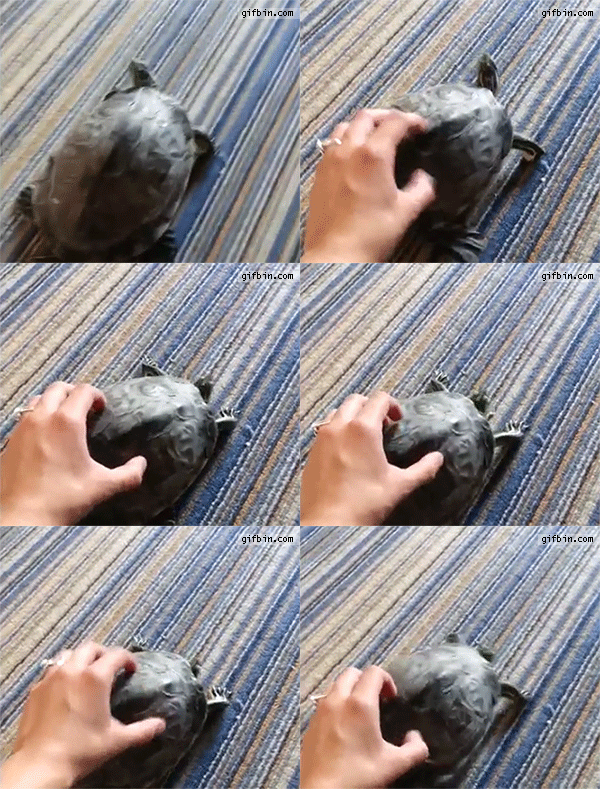
manter calor constante no corpo. Além disso, há terminações nervosas abaixo do
casco que causam as cócegas que as tartarugas tanto gostam.
Did you know that turtles feel "tickling"?
The
shell of a turtle, compost of carapace (top) and plastron (bottom), is
formed by bones and covered by a layer made of the protein keratin (the
same substance present in our nails and hair). Contrary to what most
people believe, the turtle does not outgrow its shell, because these
keratin layers, called scutellum, sheds several times during the year to
allow the shell to grow along with the animal. That's why turtles rub
themselves in stone and stay in the sun, to dry the scutellum and
facilitate the shed, and warmth, since they are cold blooded animals and
cannot maintain constant heat in the body. Besids, there are nerve endings beneath the
carapace that causes the tickle that turtles like so much.
Parece uma pérola, mas não é. Lhes apresento A Alga-perolada (Valonia ventricosa), uma das espécies mais fantásticas do mundo. São marinhas e apesar do que você pode pensar, não é uma colônia de indivíduos: cada "bolha" dessas é um indivíduo de uma única célula que mede cerca de 5 cm de diâmetro, tornando essa uma das maiores células conhecidas. Habitam manguezais e em todos os oceanos em zonas tropicais e subtropicais e conseguem viver e fazer fotossíntese mesmo em meios com pouca incidência solar. São muito estudadas, pois seu tamanho celular incomum permite boa observação da passagem de água e moléculas pela membrana. Elas podem ficar livres na coluna d'água ou presas ao substrato pelo rizoma.
It may look like a pearl, but it is not. I present to you the sea pearl alga (Valonia ventricosa) one of the most fantastic species in the world. They are marine and despite what you may think, is not a colony of individuals: each "bubble" of these is one individual of a single cell measuring about 5 cm in diameter, making this one of the largest cells ever known. They inhabit mangroves and in all oceans in tropical and subtropical areas and can live and make photosynthesis even in environments with little solar incidence. They are very studied because its unusual cell size allows good observation of the passage of water/molecules through the membrane.They can be free in the water column or attached to the substrate by rhizome.